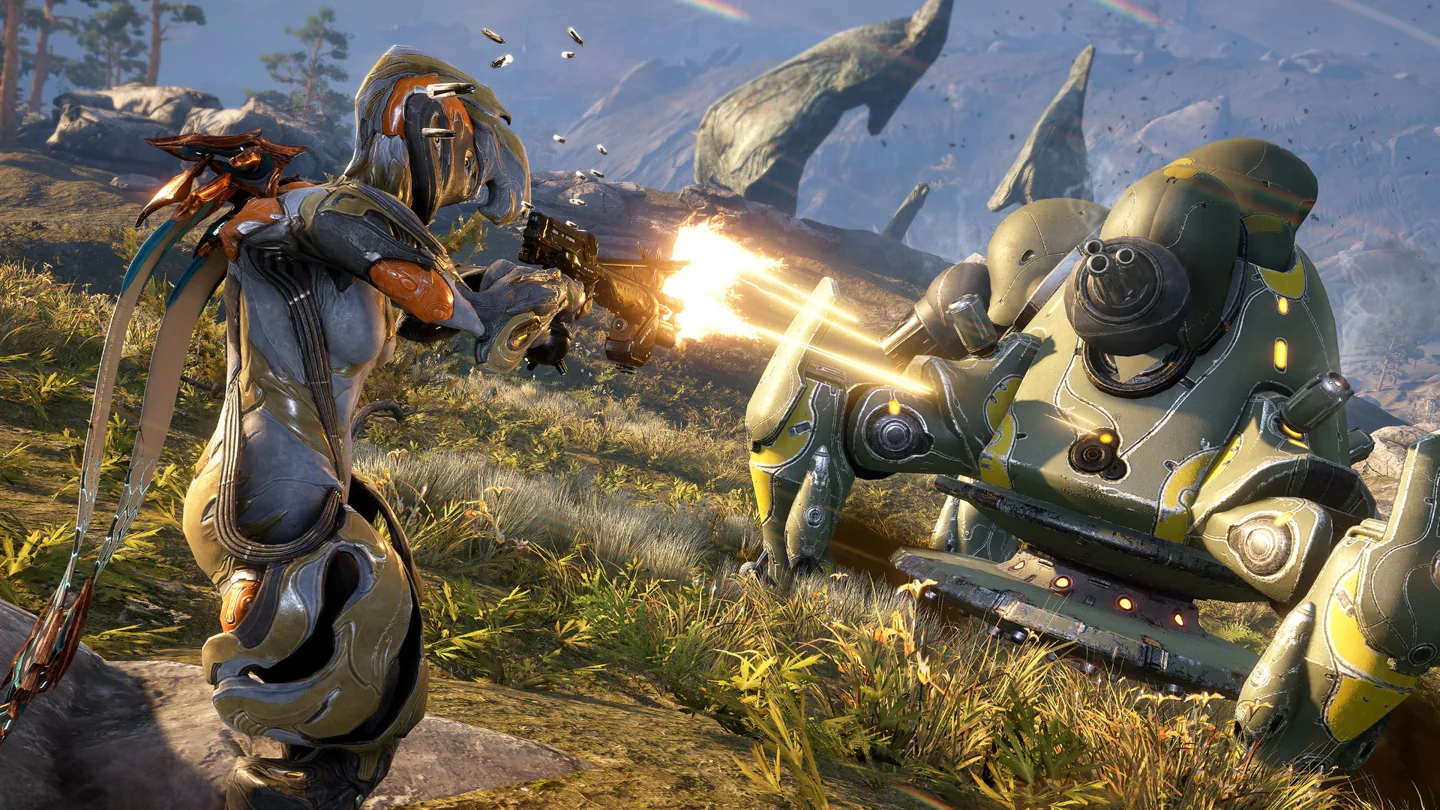
The first pleasure of Warframe is movement. A room is not just a place to clear; it is a set of surfaces to launch from, slide through and cross in one fluid gesture. That sense of momentum gives its many progression systems a physical heartbeat.
Find your flow. Then leave orbit.
Different Warframes act as distinct combat toolkits, with abilities and equipment choices supporting different approaches. The appeal is not simply acquiring something stronger. It is finding a combination that makes movement, weapons and powers feel connected.
Warframe is a good fit for players who enjoy both immediate action and a longer personal project. Those pleasures work on different timescales: a mission offers movement and combat, while the surrounding systems give that mission a reason to matter. The risk is letting the project list become a chore list. Choosing one build or one quest keeps the session connected to something you actually want to try. You can appreciate the game without treating every available system as an obligation.
A game with a history.
Digital Extremes released Warframe in 2013. The Canadian studio has developed it as an ongoing online game, expanding its missions, quests and environments. Its age is visible in the breadth of systems; newcomers should resist the urge to understand every menu on day one.
The moment-to-moment.
Complete missions, gather resources and assemble equipment. Parkour links combat spaces, while modding gives you a way to shape what your gear does. Cooperative play lets different loadouts complement one another. Progress is satisfying when you choose one attainable goal rather than opening every progression path at once.
Practise movement in a quiet space before trying to make every action part of combat. Connect a jump, a slide and a change of direction until the route begins to feel deliberate. When looking at equipment, read what a change does for your intended approach instead of assuming that a larger collection automatically creates a better loadout. In co-op, let the group know if a mission is new to you. A clear expectation about pace can make learning much more comfortable.
Follow early quests and the Star Chart. Practise the bullet jump until moving feels natural, then pick one piece of equipment to work towards.
Beyond the controls.
The Origin System is a richly peculiar science-fiction setting, where the Tenno confront rival factions and discover the meaning of their own history. The story becomes more rewarding if you leave its major revelations unspoiled.
A detail worth noticing.
Warframe comes from a Canadian developer. It is a useful reminder that a global online game can also have a connection to the country this catalogue serves.
Why it’s on the shelf
- Expressive parkour and fast combat
- Flexible co-op builds
- A substantial science-fiction world
Before you jump in
Crafting timers, currencies and overlapping systems can be confusing. The official new-player guide is worth keeping open.
No entry fee.
Read the small print.
Warframe is free to start. Platinum, cosmetics, bundles and convenience purchases are optional. Crafting and equipment acquisition involve progression, resources and sometimes waiting; free access does not mean every item is instantly available.
Canadian access depends on your device, age, account region and the publisher’s current terms. Check official availability and system requirements before installing. KAVRIQON does not sell currency, provide accounts or host the game.
Continue to WarframeFacts checked against the official sources below on 4 November 2026. Recommendations and first-session advice are editorial judgement, not a claim of a scored play test. Release years refer to the game’s original release, not its free-to-play transition.
- Official game information ↗
- Publisher-maintained Steam listing ↗
- Canadian platform listing — PlayStation ↗
- Canadian studio — Digital Extremes ↗
- Android release — official announcement ↗
- Switch 2 release — official announcement ↗