
Rocket League has a wonderfully direct first sentence: drive a car into a ball and put it in the other goal. Everything after that is discovery. The first accidental aerial, the desperate save and the perfect pass all grow from the same small set of controls.
Beautifully simple. Endlessly airborne.
Its strength is the gap between understanding and execution. You can see what you wanted to do even when your car lands upside down. Improvement is tangible because the game keeps asking you to solve familiar problems with more control.
Rocket League works particularly well for people who enjoy a skill they can feel improving. The feedback is physical: a cleaner turn, a better touch, a recovery that leaves you ready for the next play. It can also expose a gap between friends with different experience. A shared session goes better when the group agrees that useful positioning and a good pass count as successes. The best moments are often collaborative, even if the final touch belongs to one player.
A game with a history.
Psyonix released Rocket League in 2015. It later moved to a free-to-play model, with new PC players directed to the Epic Games Store. Older Steam ownership does not make Steam the current starting point for a new player.
The moment-to-moment.
Drive, jump, boost and rotate through attack and defence. Boost management determines which plays are possible; positioning decides whether you need a spectacular recovery in the first place. Playing behind a teammate rather than beside them gives your team more room and a second chance.
Try a session where the goal is to arrive in a useful place after every touch. Hitting the ball hard is only part of the problem; landing facing the play and leaving room for a teammate create the next opportunity. If both players chase the same ball, someone needs to cover the space behind them. Learning to recognise that moment gives an inexperienced player an immediate way to help. Practise simple recoveries before turning every attempt into a difficult aerial.
Keep the ball camera on while learning, use Free Play and leave space for your teammate. You do not need aerial tricks to become helpful.
Beyond the controls.
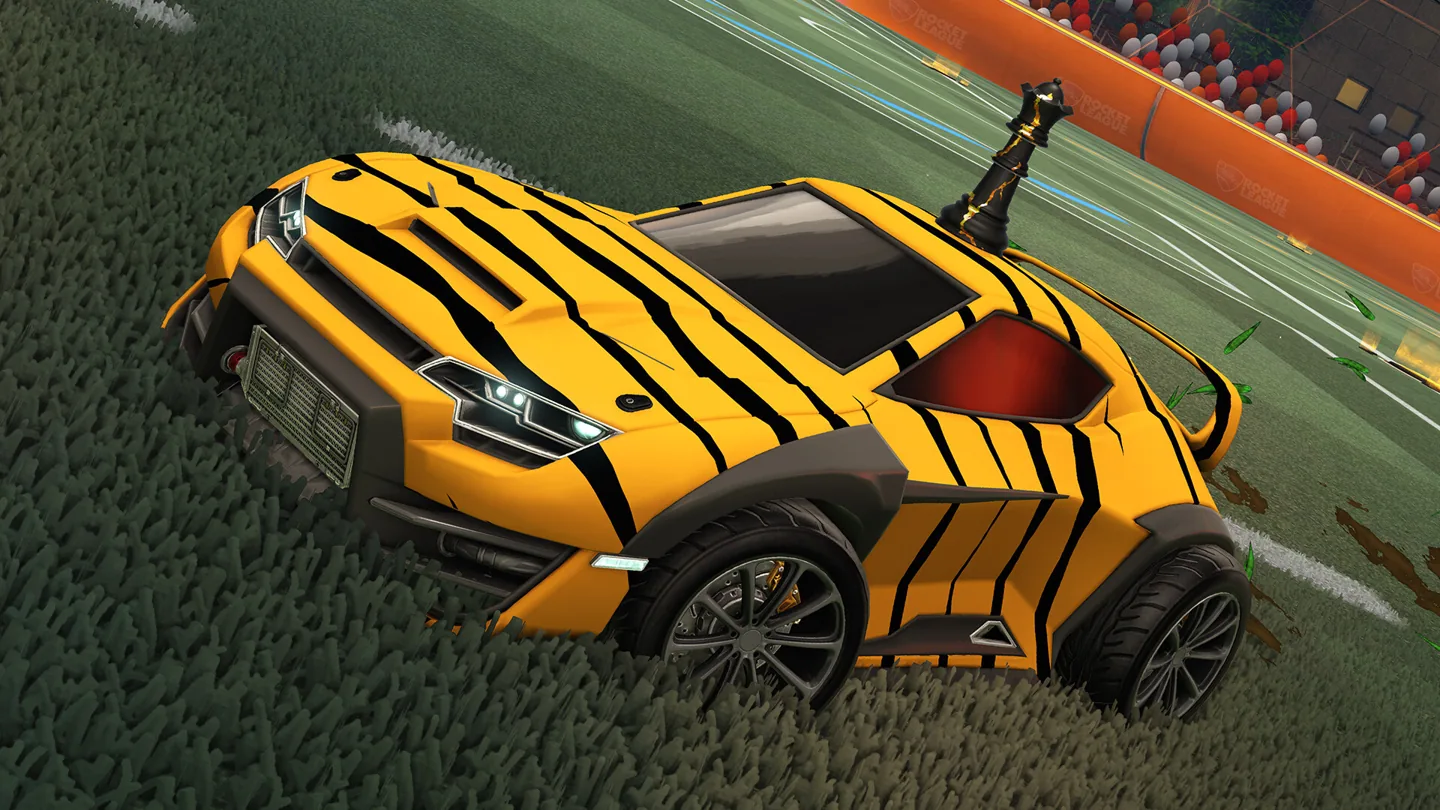
There is no required story to absorb. The arenas are sporting spaces, and customisation lets you give your car a personality. That lack of narrative homework makes Rocket League an appealing choice for a group that just wants to play.
A detail worth noticing.
Free Play is more than a warm-up. Following the ball around an empty arena is a low-pressure way to connect your inputs with the car’s momentum.
Why it’s on the shelf
- Immediately understandable objective
- Short matches suit a spare evening
- A deep movement system to grow into
Before you jump in
The early learning curve can feel comically physical. Beginners and experienced players may need different expectations in the same party.
No entry fee.
Read the small print.
The core game is free to play. Credits, cosmetic items, bundles and the premium Rocket Pass are optional. Our recommendation is for the current supported version; legacy macOS and Linux versions are not online-play options.
Canadian access depends on your device, age, account region and the publisher’s current terms. Check official availability and system requirements before installing. KAVRIQON does not sell currency, provide accounts or host the game.
Continue to Rocket LeagueFacts checked against the official sources below on 4 November 2026. Recommendations and first-session advice are editorial judgement, not a claim of a scored play test. Release years refer to the game’s original release, not its free-to-play transition.
Artwork provenance and credits ↗