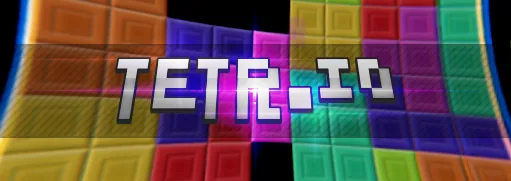

TETR.IO makes a quiet-looking board feel intensely alive. Every piece is an opportunity to tidy a mistake, prepare a sequence or recover from pressure. The pleasure is not just speed; it is the gradual feeling that your hands understand a decision before you finish thinking it.
Find order. Send a little chaos.
The developer describes it as an online stacker with a free-to-win approach. The familiar idea of arranging falling pieces becomes both a personal efficiency puzzle and a contest against other players. There is no fictional campaign you need to follow.
TETR.IO is compelling for players who enjoy a repeatable physical skill with very little narrative overhead. The board makes the consequences of a placement visible immediately, while a competitive opponent adds pressure to decisions that felt comfortable in practice. That pressure can be useful once the controls feel dependable. Give yourself permission to learn at a slower pace. A clean, recoverable stack provides a foundation for speed; a frantic session can hide which part of the process is actually causing trouble.
A game with a history.
TETR.IO’s public alpha dates to 2020, documented in its official patch archive. The project is led by osk, with a team credited on the official about page. Its ongoing patch notes are a better guide to current systems than an old video or a launch-era description.
The moment-to-moment.
Rotate and place pieces to complete lines while keeping a usable board. In competitive play, efficient clears can apply pressure to an opponent. Recovery matters: building something tidy at low speed is a better foundation than moving quickly into a position you cannot use.
Use solo practice to distinguish between a planning mistake and an input mistake. If you know where a piece should go but repeatedly place it elsewhere, review the control settings and your sequence of movements. If the placement succeeds but leaves an awkward board, spend more time reading the next pieces and possible spaces. That separation makes improvement more deliberate. In multiplayer, notice how pressure changes your choices, then return to a quiet setting to practise the specific situation that caused the problem.
Spend time in solo practice and adjust the controls carefully. Build a flat, recoverable stack before worrying about speed.
Beyond the controls.
The presentation is abstract and competitive rather than narrative. Player profiles, records and community competition provide the surrounding context. This is an independent game, not an official Tetris-branded product.
A detail worth noticing.
Browser access and a downloadable desktop client are separate ways into the same project. Check the official performance guidance if your browser struggles with responsiveness.
Why it’s on the shelf
- Direct browser access
- Precision-focused controls
- Solo practice and multiplayer competition
Before you jump in
Competitive play becomes demanding quickly. It is more suitable for a physical keyboard than a small touch screen.
No entry fee.
Read the small print.
The core game is free. Supporter options and advertising help fund the service; review the current supporter page for premium presentation or convenience features. You do not need to purchase entry to begin playing.
Canadian access depends on your device, age, account region and the publisher’s current terms. Check official availability and system requirements before installing. KAVRIQON does not sell currency, provide accounts or host the game.
Continue to TETR.IOFacts checked against the official sources below on 4 November 2026. Recommendations and first-session advice are editorial judgement, not a claim of a scored play test. Release years refer to the game’s original release, not its free-to-play transition.
Artwork provenance and credits ↗