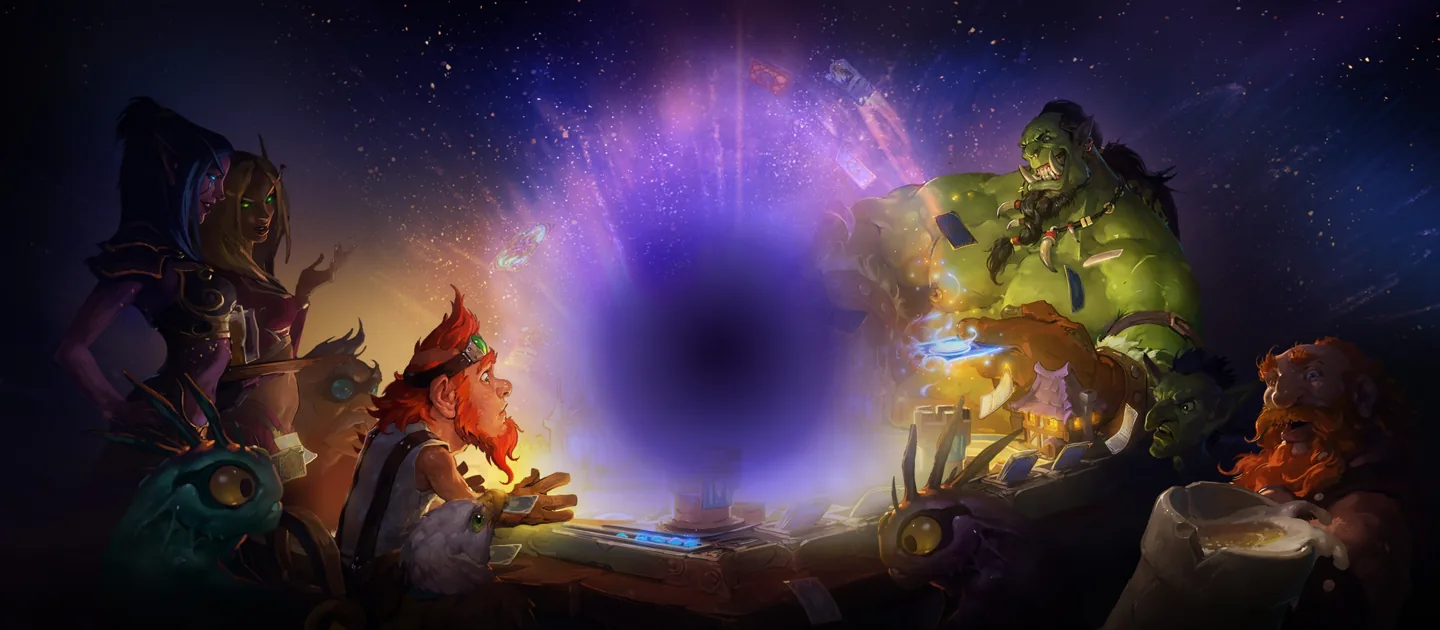
Hearthstone turns a card table into a small theatre. A turn can be careful arithmetic, an improbable escape or a sequence of effects that only makes sense after it resolves. Its strongest invitation is that every decision gives you a moment to think.
Pull up a chair. Play a better hand.
The core design makes a strategy card game readable through a digital board: visible resources, clearly staged turns and effects the game resolves for you. Building a deck is one kind of puzzle; playing the cards in the right order is another.
Hearthstone suits someone who enjoys thinking through consequences with a little time between actions. A turn has an immediate problem on the board and a less visible question about what may happen next. The collection adds another layer, which some players enjoy and others find distracting. Choosing a mode is therefore part of choosing the game. Start with the format whose decisions interest you, then consider whether its progression and purchase systems fit the way you want to spend your time.
A game with a history.
Blizzard released Hearthstone in 2014. Ongoing card sets and additional modes have broadened it beyond the original constructed-deck format. The version you find today is a collection of related ways to play rather than just the launch game with extra cards.
The moment-to-moment.
In traditional matches, spend mana on minions, spells and other cards to pressure the opposing hero while protecting your own. Think about what your opponent can do next, not just the most impressive move available now. Battlegrounds offers an alternative that does not require bringing a constructed card collection.
Before playing a turn, identify the most important thing the opponent could do next. You cannot predict every possibility, but the question encourages a plan that extends beyond using all available mana. After a loss, revisit one turn where you had a meaningful choice. Did you need to take a risk, preserve a resource or address a threat sooner? A specific question will teach more than blaming the entire result on one random effect or assuming a more expensive collection would solve every decision.
Finish the introductory content and try the available starter decks before spending resources. Read a card twice before crafting it.
Beyond the controls.
Its heroes, creatures and humour draw on Warcraft. Familiarity with that universe adds recognition, but the board explains the practical job of each card. You do not need a World of Warcraft subscription to play Hearthstone.
A detail worth noticing.
Battlegrounds is a useful branch to investigate if building a card collection is not what interests you. Its economy and premium options differ from traditional Hearthstone.
Why it’s on the shelf
- Clear turn-based decisions
- Desktop and mobile progression
- Several modes with different demands
Before you jump in
Building particular constructed decks can take time or purchases. “Free” does not mean immediate access to every card.
No entry fee.
Read the small print.
The game is free to play. Packs with random cards, bundles, cosmetics, passes and some mode-related features can cost money. Card collection and optional purchases affect your options; check the mode you intend to play.
Canadian access depends on your device, age, account region and the publisher’s current terms. Check official availability and system requirements before installing. KAVRIQON does not sell currency, provide accounts or host the game.
Continue to HearthstoneFacts checked against the official sources below on 4 November 2026. Recommendations and first-session advice are editorial judgement, not a claim of a scored play test. Release years refer to the game’s original release, not its free-to-play transition.
Artwork provenance and credits ↗